





 (1 votes, average: 5.00 out of 5)
 Loading...
Fullscreen











 (1 votes, average: 5.00 out of 5)Loading...
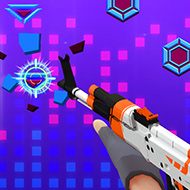
What happens when a rhythm game swaps the piano for a gun? That’s the entire premise behind Perfect Piano Magic, and it’s a stranger combination than the name suggests. Despite the title, you’re not tapping keys — you’re aiming, and that single swap changes how the whole genre feels to play, turning something usually about finger dexterity into something closer to a reflex shooter set to music.
| Genre | Rhythm / Arcade Shooter |
| Platform | Browser, mobile |
| Core Mechanic | Shooting falling note-blocks in time with the music |
| Lives Per Run | 3 |
Colored note-blocks fall in sync with a background track, and your job is to shoot them as they cross a target line, essentially using the gun the way you’d use your fingers on a real keyboard. Miss too many and the run ends; hit them cleanly and the game rewards you with points and, eventually, currency to unlock stronger guns. It’s a small swap in control scheme, but it changes the feel of the genre — this is aiming and reaction time standing in for finger dexterity, and it means players who’ve never touched a piano-tile game can pick up Perfect Piano Magic and feel at home within a level or two.
Beginners tend to make the same mistake early on: chasing accuracy over rhythm, trying to line up a perfect shot on every block instead of staying loose and moving with the beat. Perfect Piano Magic punishes hesitation more than it punishes small aiming errors, so players who treat it like a shooting gallery usually improve faster than players trying to be surgical about every note. That distinction — rhythm first, precision second — is the single most common piece of advice repeated by players who’ve cleared the game’s later levels.
As you progress, the note density and rhythm difficulty both climb, and the three-life limit stops being a formality. Later stretches ask you to track more blocks arriving faster, which is where unlocking better guns actually starts to matter instead of feeling like a cosmetic reward. A player who leans on reflexes tends to thrive once the note density rises, while a player who prefers a slower, more musical pace usually gets more enjoyment out of the earlier, gentler stages before that shift kicks in.
The honest criticism players raise most often is that Perfect Piano Magic sits in an odd middle ground — not precise enough to satisfy players who want a serious rhythm game, and not deep enough as a shooter to stand entirely on its own. That’s a fair read of the design, and it’s worth knowing going in rather than expecting either genre in its purest form. It’s less a hybrid built to satisfy both audiences fully and more a light, quick game that borrows just enough from each side to stay interesting.
Where it does land well is with players who like quick, low-commitment sessions. Someone who enjoys twitch-reaction games gets a lot out of the tightening note density in later stages, while someone who mainly wants a music toy can still enjoy the earlier levels without needing sharp aim. That split appeal is part of why the game keeps showing up across multiple browser gaming sites under near-identical names, each one framing it slightly differently for a slightly different crowd of casual players.
Unlocking guns changes pacing more than it changes strategy — faster fire rate and wider hit windows make the later, denser levels manageable, so saving up currency before pushing into harder songs tends to pay off more than spending it immediately. This is the kind of detail that only becomes obvious after a few failed runs: spending gold the moment you earn it on a small upgrade often leaves you underpowered right when the game demands more, while holding out for a meaningful gun upgrade smooths out an entire stretch of harder levels at once.
Rhythm over precision: Players who succeed in Perfect Piano Magic tend to stop aiming carefully at each block and start firing on the beat instead, letting timing do the work that precision aiming can’t — a habit that becomes almost automatic once the music itself becomes the primary cue rather than the visual position of each falling block.
They’re functional. A faster gun keeps up with denser note patterns in later levels, and a wider hit window forgives the small timing slips that come from playing fast. Sticking with the starting gun into later stages is one of the more common reasons players stall out, and swapping to an upgraded gun as soon as it’s affordable is usually a bigger jump in performance than practicing more with the starting weapon.
Usually it’s timing, not aim. Perfect Piano Magic tracks the moment of the shot relative to the beat, so a technically accurate shot fired a beat early or late still counts as a miss. Slowing down and syncing to the music rather than the visual position of the block tends to fix this, and players who consciously count the beat out loud during early attempts often see their accuracy improve within a single session.
Perfect Piano Magic won’t satisfy anyone looking for a strict, by-the-book rhythm game, but as a loose hybrid of aim and timing, it’s a decent way to spend ten minutes — especially once you’ve unlocked a gun that can actually keep pace with the later note-blocks.






There are no reviews yet. Be the first one to write one.