





 (1 votes, average: 5.00 out of 5)
 Loading...
Fullscreen










 (1 votes, average: 5.00 out of 5)Loading...
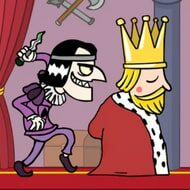
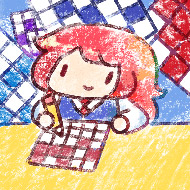
 Murder looks like a cartoonish palace sketch, all bright colors and a bumbling king pacing his throne room, but it plays like a one-button reflex trial where half a second of hesitation is the difference between the crown and the dungeon.
As the assassin, holding the spacebar charges your approach, creeping you closer to the king while the bar fills, and releasing it delivers the strike. The first few attempts usually end the same way, with the king spinning around at the worst moment and the run ending in the dungeon.
What separates a clean kill from a wasted attempt is reading the king’s tells: a cough, a twitch of the nose, or a roll of the eyes, each appearing just before he turns to check behind him. Catching one of those signals and holding the charge instead of pushing forward is the entire skill being tested.
For a lot of new players, the tells feel closer to guesswork than a pattern for the first several rounds.
Releasing too soon leaves you stabbing at empty air short of the throne, while releasing too late means the king has already turned and caught the approach mid-stride. Neither mistake is recoverable, so the charge has to be paced to the tells rather than a fixed rhythm.
Players who favor a cautious build-up creep forward in short bursts between each tell, holding the charge the moment a cough appears rather than trusting momentum. That patience costs time, but it rarely costs a life.
Others push hard the instant the first tell shows and accept the occasional dungeon trip as the cost of a faster run. Neither rhythm is objectively correct, since the charge works the same way regardless of how fast a player commits.
Winning the throne flips the game. As king, the spacebar now looks behind instead of charging forward, and a bar ticks down that visibly ages your character, greying his hair and growing a beard as the reign continues.
That aging bar is only visible once you have held the crown a while, and it turns defending the throne into a race against your character’s age as much as any assassin sneaking up. Ignore it long enough and the reign ends on its own.
A long reign that outlasts the aging bar produces its own reward screen, distinct from the plain dungeon ending most failed attempts share. Reaching it takes surviving more than one challenger, since fresh assassins keep arriving as the beard grows longer.
Once you take the throne, a small rotating cast of would-be killers shows up instead of the same attacker every time. Each one calls for a different reaction than the look-and-stab response that worked as the assassin.
A king who only braces for a stabbing gets caught off guard by the Jester or the Heart Person, since neither plays by the rules learned as an assassin. Players who treat every visitor the same way tend to lose reigns they could otherwise stretch out much longer.
Getting caught by the Jester produces its own ending screen, separate from the standard dungeon fail. The game has racked up millions of plays across the platforms that host it, with nearly two million on one site alone and well over ten million mobile downloads.
Murder earns its bluntness honestly: every reign starts on a knife-edge read of a cough or a twitch, and every crown taken just paints a target for the next assassin, whether that is Mace Man swinging first or the Jester lobbing the crown into a restroom instead. The dungeon is always one bad guess away, which is what keeps a short round worth going back for.






There are no reviews yet. Be the first one to write one.