







 (3 votes, average: 3.33 out of 5)
 Loading...
Fullscreen










 (3 votes, average: 3.33 out of 5)Loading...
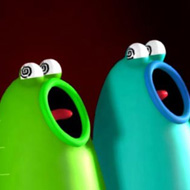
You drag the bass blob down toward the floor of the screen, and a low, rumbling note fills the room before you’ve even figured out what you’re doing. That’s the entire onboarding process for Blob Opera: no tutorial, no menu, just four singing characters waiting to respond to your mouse.
Blob Opera was built by artist David Li in collaboration with Google Arts and Culture, using a machine learning model trained on sixteen hours of recorded singing from four professional opera performers covering bass, tenor, mezzo-soprano, and soprano ranges. What you actually hear isn’t their voices directly, but the model’s learned interpretation of how those voices behave.
That distinction matters more than it sounds. Because the harmonies respond to your input in real time rather than playing back fixed samples, the same drag gesture on two different days can produce slightly different phrasing, which is part of why the experiment holds up to repeated play far longer than a novelty toy usually does.
Control is deliberately minimal. Dragging a blob up or down changes its pitch, while moving it forward or backward shifts the vowel sound it sings, and the other three blobs harmonize automatically around whatever you’re doing to the one you’re controlling.
Muting individual blobs lets you isolate a single voice, which is a useful way to actually hear what the bass or soprano model is doing on its own before layering it back into the full quartet.
New users often try to control all four blobs at once through rapid clicking, when the intended approach is closer to conducting: shape one voice at a time and let the model harmonize the rest. Fighting that structure just produces noise instead of the layered chords the system is built to generate.
Players also tend to abandon a session too quickly, missing that recording and sharing a performance is one of the more rewarding parts of the experience once you’ve found a phrase worth keeping.
Clicking the small tree icon switches the blobs into festive mode, complete with Santa hats, and lets you trigger pre-arranged carols like Jingle Bells and O Holy Night performed entirely through the same machine-learning voice model. It’s a departure from the free-form sandbox, but it demonstrates the system’s range better than open-ended dragging usually does on its own.
Every session can be recorded and exported for sharing, and this feature is a large part of why Blob Opera spread as widely as it did after its December 2020 launch. Screen recordings of oddly compelling four-part harmonies traveled well on social platforms in a way a static screenshot never could.
Blob Opera relies on fairly demanding web audio technology, and Google has been upfront that it may not run smoothly on older devices or some mobile browsers. Desktop remains the more reliable way to experience the full harmonization in real time without stutter.
Some visitors find the lack of any goal, score, or level structure refreshing, treating it purely as an instrument. Others expected more game-like progression and bounce off quickly once the novelty of the first few minutes wears off; both reactions are common enough in discussion threads to count as a genuine split rather than a fringe opinion.
Four opera singers recorded roughly sixteen hours of material covering tenor, bass, mezzo-soprano, and soprano ranges, which trained the machine learning model that generates the blobs’ singing in real time.
No, the blobs produce vowel sounds shaped by how far forward or back you drag them, rather than full lyrics, though the effect still resembles operatic phrasing closely enough to feel intentional.
It can, but Google notes the experience relies on demanding web audio technology and performs best on a desktop browser rather than older or lower-powered mobile hardware.
Blob Opera doesn’t ask you to win anything, and that’s precisely why it’s stayed relevant years past its initial release. Between the Christmas mode’s carols and the raw sandbox of dragging the soprano blob into an impossible high note, it remains one of the more genuinely surprising uses of machine learning wrapped in something anyone can operate within seconds.






There are no reviews yet. Be the first one to write one.