





 (No Ratings Yet)
 Loading...
Fullscreen





 (No Ratings Yet)Loading...
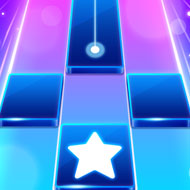
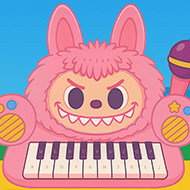
Labubu Piano looks like a novelty skin slapped onto a familiar tile-tapping formula, but it plays like a genuinely fast-paced reflex test once the tempo climbs. Built around one-touch controls, the game strips away everything except tapping black tiles in time with the music while a 3D Labubu figure reacts to your accuracy on screen.
The rules are almost aggressively simple: tap the black tiles, avoid the white ones, and don’t let a tile scroll past untouched. Missing a tile or hitting the wrong one ends the run immediately and sends you back to the start of that song, which is harsher than some tile games in the genre.
Speed scales directly with your own tapping rhythm rather than a fixed difficulty curve. The faster and more consistently you tap, the faster tiles begin arriving, which means a strong early streak can accelerate into a genuinely demanding late section on the same song.
Timing accuracy is tracked through the “perfect,” “great,” and “cool” ratings that flash after each successful tap, and chasing consistent “perfect” hits rather than just avoiding misses is what separates high scores from merely finishing a song. Casual players often ignore this rating system entirely and just focus on survival, which caps their score well below what the mechanics actually allow.
Disc styles can be swapped between songs, changing the visual theme around the tile lane without altering the underlying difficulty, which is a small touch but one players in the reviews mention often as their favorite customization option.
New players tend to watch the tile they’re currently tapping instead of scanning ahead, which works fine at low speed and falls apart the moment the pace increases. Reading one or two tiles ahead is the adjustment most players need to make to survive past the early levels.
Favoriting songs early is another habit worth building, since the game lets you save preferred tracks to a dedicated menu, and returning players often wish they’d done this from the start instead of hunting through the full list each session.
The Labubu branding is the most debated part of the experience. Some players enjoy the character theming layered over otherwise standard tile mechanics, while others see it as a reskin with little connection to the source material beyond visuals, and that criticism is fair given how little the theme changes the actual gameplay loop.
Ad frequency between songs is another common complaint, echoing a pattern seen across most free tile-tapping games in this space.
What happens if you tap a white tile in Labubu Piano? The run ends immediately, and you restart the current song from the beginning rather than losing partial progress within it.
Does the tapping speed in Labubu Piano increase automatically? Yes, tile speed rises the more successfully you tap, so maintaining a long streak is what pushes a song into its hardest stretch rather than a fixed timer.
Can you change the visual theme in Labubu Piano without affecting difficulty? Yes, swapping disc styles only changes the tile lane’s appearance, not the timing or speed of the song underneath it.
Labubu Piano never tries to be more than what it is: a fast, unforgiving tile-tapper wearing a popular character skin. The “perfect” rating system gives it just enough depth to reward players who push past simple survival, even if the Labubu theme itself stays mostly cosmetic throughout.




There are no reviews yet. Be the first one to write one.