




 (No Ratings Yet)
 Loading...
Fullscreen





 (No Ratings Yet)Loading...
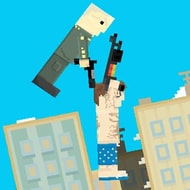
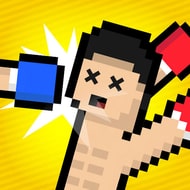
You load into a match and the first thing you notice is that both fighters are wearing business suits this round, standing on a rooftop instead of a ring, and neither of you has landed a single punch yet because the ragdoll limbs haven’t stopped swaying from the spawn animation. That’s the starting condition of Boxing Random every single time — a new outfit, a new backdrop, and a body that barely obeys the one button you’re about to mash.
| Genre | Physics sports battler |
| Players | 2, local or matched |
| Controls | One key — Up arrow (P1) or W (P2) |
| Match format | First to five round wins |
Boxing Random strips boxing down to a single input that somehow covers jumping, moving forward, and throwing a punch depending on timing and position. There’s no separate punch button, no block command, and no dedicated dodge — everything comes from the same tap, which is exactly why fights look like two drunk marionettes swinging at open air half the time.
The ragdoll physics engine means your character’s arms and torso react to momentum rather than snapping into clean animations, so a punch that should land clean can wobble past a target by inches because your fighter was still recovering from the last jump.
New players assume more taps mean more damage. It’s the opposite — spamming the key sends your fighter into a stumble that leaves it wide open, and waiting for a clean approach angle works far better than button-mashing through it.
Environments, outfits, and even the two fighters’ appearances change from round to round without warning. One match puts both players in shorts during a snowstorm, the next drops them onto a beach with sharks visible in the water below the platform, and neither change affects the actual physics — it’s purely a reset of the visual theme layered over identical rules.
That constant reshuffling is the entire appeal for a lot of regulars, since no two matches ever look alike even when the underlying mechanics stay exactly the same. It’s also the most common complaint in reviews — some players find the randomized presentation charming, others think it’s a gimmick covering for fairly shallow core mechanics once you strip the outfits away.
A full match plays out as a race to five round wins, and each round ends the instant one fighter lands a knockout blow rather than running a timer. That format rewards patience over aggression in a way a lot of new players don’t expect walking in — dying repeatedly by overextending early in a match teaches the lesson faster than any tutorial text would.
Because rounds are short, a bad start rarely buries you the way it would in a longer format. Losing the first two rounds by rushing in still leaves three clean rounds to climb back, which keeps most matches competitive until the very last knockout.
Certain rounds flip on a rule where a knockout punch can land anywhere on the body, not just the face, which completely changes how you approach spacing. Once that mode kicks in, sitting back and waiting for a clean headshot stops being a safe strategy, because a stray punch to the torso ends the round just as fast.
Defensive players who only ever aim high get caught out hard the first time a pocket pouch round appears, since the habits built in a normal round actively work against them here.
Jumping into an opponent right as they’re mid-swing knocks their momentum off just enough to leave them stumbling, and landing a hit during that stumble window does more effective damage than trading clean punches would. It’s the kind of thing you only notice after dozens of matches, once you start recognizing the specific wobble animation that means an opponent is off balance for the next half-second.
That window is narrow and easy to whiff, which is why it stays a high-skill technique rather than something picked up in a single session.
Nothing mechanical changes between themes, but player behavior shifts anyway — a beach round with sharks visible below the platform makes players noticeably more cautious about getting knocked toward the edge, even though the game never lets the shark actually end a round on its own.
No — every visual theme, from business suits to snowy rooftops to beach platforms, sits on top of identical ragdoll physics and identical controls. The randomization is presentation only, and the punch timing, movement, and knockout rules never change underneath it.
That’s the ragdoll system reacting to momentum you built up from a jump or an earlier swing — tapping the key rapidly without spacing out your movement causes exactly this stumble, and the fix is deliberate single taps timed to your opponent’s position rather than rapid mashing.
In a pocket pouch round, a knockout can land anywhere on the body instead of requiring a hit to the head, which means torso and body shots that would normally just push an opponent back can end the round outright.
None of that unpredictability ever settles into something you can fully solve. Boxing Random keeps reshuffling its business suits, beach platforms, and pocket pouch rounds, and the one key you started with is still the only thing standing between you and the next knockout.




There are no reviews yet. Be the first one to write one.