





 (No Ratings Yet)
 Loading...
Fullscreen









 (No Ratings Yet)Loading...
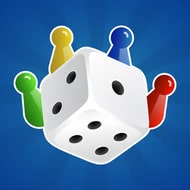
 You roll the die, watch it settle on a six, and roll again because that’s the rule that gets a token out of the base and onto the track. Two turns later a rival pawn sits three squares ahead, unprotected, and you roll exactly the number needed to send it back. That exchange — six, move, capture — is the rhythm of Ludo Hero, repeated until someone walks all four tokens home.
Ludo Hero keeps the shape of the board game most people already know: four colored yards, a cross-shaped track looping the middle, and a home triangle only the owning color can enter. What changes is who you’re rolling against — instead of family waiting a turn at a table, you can be matched against opponents from around the world, or sit against the computer to practice the rules alone.
Nothing moves until a token leaves the base, and nothing leaves without a six on the die. Early in a match this produces a familiar tension — tokens sitting parked while one player rolls a five, then a two, then finally a six. A six also grants an extra roll on the same turn, which is where matches swing hardest: chain two or three together and a token can leave base, travel several squares, and set up a capture before anyone else has had a turn.
This is where beginners lose ground without noticing why. New players treat every six as a reason to bring out a fresh token, when the sharper play is advancing one already deep into the track — a fourth token brought out late just hands opponents more targets.
Certain squares on the track carry a star, and a token there is immune to capture — opponents can share it but can’t send it back to base. Reading which squares are starred, and timing movement to land on one instead of stopping short, is the most repeated practical skill here. Cautious players who camp on star squares tend to outlast those who push forward on every legal move.
Capturing is simple landing: put a token on the exact square an opponent’s unprotected token occupies, and theirs goes back to base, losing its progress. A lead is never as safe as it looks — a token three-quarters around the board can be erased by one well-timed roll from an opponent two turns behind. That swing is what players bring up most when calling the game frustrating and addictive at once, and aggressive players who hunt captures instead of just advancing often decide matches on whether it pays off before their own tokens get cut in return.
Quick Mode strips the format down for players without time for a full four-token match, giving everyone just two tokens instead of four and shortening the setup and the endgame alike. It suits a player who wants a complete match on a short break rather than a session stretched across rounds of captures and comebacks.
With only two tokens to manage, decisions carry more weight — losing one of only two is close to losing half your position, so star-square timing matters even more once the count drops this low.
Getting a token into the colored lane leading to the home triangle solves only half the problem. The last stretch requires an exact roll — overshoot the final square and the token can’t move that turn, even if every other option is worse. By the third or fourth token nearing home, players start rolling with a specific number in mind, and matches often stall on this exact-count requirement while a trailing opponent catches up. Winning needs all four tokens in that triangle, and it’s common to see a player get three home comfortably, then lose turns to a single straggler rolling numbers too large for the space remaining.
Cutting is what players call a capture, a term carried over from how the physical board game has long been talked about. Home lane is the short colored stretch just before the triangle, where only your own color can travel and the exact-roll rule applies. Base is the starting yard each color owns before a six lets a token escape, and a token stuck there through a run of low rolls gets talked about exactly that way. Avatars, picked before a match starts, are the one cosmetic layer on top — they make matches against real opponents feel less anonymous than rolling against the computer.
What keeps people coming back to Ludo Hero, and what keeps them occasionally groaning at their screen, is the same thing: the die decides more than the player does on any given turn. That’s a real point of friction some players raise, since a strong position can be undone by one unlucky sequence of rolls with no way to plan around it. The design leans into that instead of hiding from it, betting the tension of an exposed token near the home lane is worth more than a cleaner, skill-only version would be.






There are no reviews yet. Be the first one to write one.