






 (1 votes, average: 5.00 out of 5)
 Loading...
Fullscreen






 (1 votes, average: 5.00 out of 5)Loading...
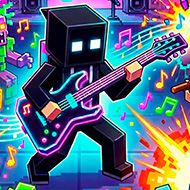
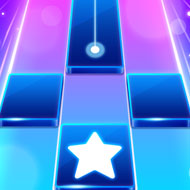
You see the first block drop into the lane a half-second before the drumbeat lands, and your hand is already moving. Slice too early and the block just cracks and keeps falling. Slice on the beat and it shatters clean, your streak counter ticks up, and the track feels like it’s reacting to you instead of the other way around. That’s the loop Music Sword Beat runs on, and once it clicks, it’s hard to put down.
| Genre | Music / Rhythm Action |
| Platform | Browser, desktop and mobile |
| Controls | Mouse swipe or touch drag |
| Core Objective | Destroy falling blocks in sync with the music |
The premise is simple to describe and much harder to execute well. Blocks fall from the top of the screen, and each one is timed to a specific hit in the track playing underneath it. Your sword doesn’t fire on a button press — it swings wherever your cursor or finger moves, which means the swing itself has to travel through the block’s position at the right moment. A game built around square blocks and a soundtrack sounds minimal on paper, but the way the falling pattern locks to the actual instrumentation is what separates this from a generic tapping game.
New players tend to watch the blocks and ignore the music, which is backwards. The blocks are a visual echo of what’s already happening in the track — they drop on downbeats, snare hits, or melodic accents depending on the song. Once you start listening first and swinging second, the pattern stops feeling random. You’ll notice yourself anticipating the next block before it’s fully visible, because your ear already told you where the hit was coming.
This is where the game separates casual clickers from players chasing a clean run. A block struck slightly off the beat still registers as a hit, but it won’t feel or score the same as one caught exactly on time. Rhythm game players sometimes call this “reading ahead,” and it applies here just as much as it does in any note-chart game — you’re not reacting to what’s on screen, you’re reacting to what you just heard and predicting what’s next.
By the second half of most tracks, the drop rate noticeably increases and blocks start arriving from more than one direction at once. That’s usually the point where players either settle into the rhythm or start missing in clusters. There’s no shame in the second one — it just means the track’s tempo shift caught you off guard, and the fix is almost always slowing your swing down, not speeding it up.
Score in Music Sword Beat isn’t just about how many blocks you hit — it’s about how many you hit in a row. A missed swing resets your streak, which resets your multiplier back to its base stage, so a single sloppy read late in a track can cost more than several early misses combined. This is the mechanic that turns the game from a rhythm toy into something with actual stakes: a clean, uninterrupted run through a track is a genuinely different experience than a run with three or four breaks in it.
Players chasing a full clear — what the community shorthand calls an FC, or full combo — tend to replay shorter tracks obsessively before moving to longer ones, since a single miss anywhere in the song ends the run. It’s a grind some players enjoy and others find tedious, and that split shows up pretty consistently in how people talk about the game: some treat every track as a puzzle to be solved perfectly, others just want to swing along to music they like without worrying about a streak counter.
Beginners almost always underestimate the second half of a difficult track. The opening bars ease you in, the drop rate feels manageable, and then the track builds toward its chorus or final section and throws considerably more at you in a shorter span. This is a common failure point across rhythm games generally, and Music Sword Beat leans into it rather than smoothing it out — the difficulty curve inside a single song is often steeper than the difficulty curve between songs.
The most useful advice experienced players give newcomers is to stop watching the sword. Your peripheral vision handles the blade’s position fine once you’ve played for a while; what actually needs your attention is the incoming blocks and the beat underneath them. Players who fixate on their own swing tend to overcorrect and swing too hard or too fast, which throws off timing more than it fixes it.
It also helps to pick tracks you already know well before attempting harder ones. A familiar song gives your ear a head start — you already know where the drop is coming, so your hand just has to catch up. Once that habit is built, it transfers cleanly to songs you’ve never heard before, because you’re listening for structure rather than memorizing a specific track.
It follows the track. Blocks are timed to specific hits in the music rather than dropped on a fixed clock, which is why songs with unusual rhythms feel noticeably different to play than straightforward ones.
A block has to be struck within a tight window around the actual beat, not just generally “close.” Slightly early or slightly late swings still miss the clean-hit window even if they connect with the block visually, which resets the multiplier.
Replaying shorter, familiar tracks is the most reliable way to build timing before attempting longer or faster songs, since the skill transfers directly and a short track gives you far more attempts per minute than a long one does.
None of this makes Music Sword Beat forgiving, and it isn’t trying to be — the multiplier system exists specifically to punish inconsistency, and that’s exactly what keeps players coming back to shave one more miss off a run. Whether you’re chasing a full-combo clear or just swinging along to a track you like, the game rewards listening more than it rewards reflexes, and that’s the part that keeps it interesting past the first few songs.





There are no reviews yet. Be the first one to write one.